Tag: love of God

More Easter poetry

More Easter poetry

Gazing at the wonder of the Cross

Abundant grace

Golden light on dew-kissed roses

Heralding the break of day

Cooing doves, at morn’s awakening

Dusty hooves of foals at play

Wheat fields, like a tawny ocean

Rippling in the wind’s caress

Dancing streams, their spray asparkle

Pensive pools in quiet rest

Air perfumed with scent of jasmine

Wind charm’s soft melodious ring

Dappled earth through filtered sunlight

Gamboling lambs at start of spring

Miracle of baby’s birthing

Brand new breath, a lusty cry

Old man resting, children’s chatter

Puff balls in a dreamy sky

Cells and segments of an orange

Neatly packed with tasty bliss

Warm embrace of two young lovers

Tenderness of mother’s kiss

These and countless other blessings

Are bestowed on us each day

Pointing us to God’s compassion

Showing us His love-filled way

He surrounds us with His beauty

Fills our souls with untold wealth

Lifting them from deep depression

Into happiness and health

Yet His greatest gift of goodness

Starts its journey steeped in death

Wounded Saviour hanging, dripping

Blood for us with His last breath

Cursed that he might buy our healing

‘Tombed to fight for all our souls

Breaking forth in glorious victory

Empty grave, and men made whole.

What a song our hearts are singing

Let the church bells toll and toll

Jesus is our Lord and Saviour

‘Tis indeed well with my soul.

Easter Poetry

Easter Poetry

Gazing at the wonder of the Cross

As we approach the most glorious time in the Christian’s calendar, I’ll post some poems I have written on the subject. The first is in response to the Word that tells us Jesus still bears the wounds in His body (He showed them to the disciples when He appeared to them). The second is because we are told He is constantly interceding for us. I hope you enjoy it.

HOLY WOUNDS

Oh, to think that I, with all my stains of darkness

Could stand before a God of white-hot holiness

And not be burned.

What holy wounds that gain for me

An entrance to the King!

For Christ in all his glory, stays injured still for me

His hands and feet, though brilliant bright

Stay pierced and raw through all my sin

And plead each day my cause.

For as I sin, and blot my soul, and then repentant come

His Father from His awesome throne

Looks down and sees his Son.

He sees His Son take on my guilt and then it’s penalty

He looks at me through holy wounds

And says, “My son, you’re free.”

I’m free indeed and yet not free.

I’m tethered by a bond so strong

That holds me ever in his arms.

For how could I ignore a love so great

And go my selfish way?

Those holy wounds produce in me

The prayer spoke in Gethsemane

“Let not my will, but Thine be done.”

Come, live through me, beloved Son.

Cry, the Beloved country

Cry, the Beloved country

Weeping for Israel

I have a burning question: When the prophets such as Jeremiah, Isaiah and many of the minor prophets spoke harshly against the rulers of Israel and Judah, were they being anti-Semitic? Were they not crying out to a country they loved, as a parent cries out to a beloved child whom you can see is leading a destructive lifestyle? So, when we criticise Israel, are we being anti-Semitic and pro-Islam?

As I read the history of Israel and Judah in the Old Testament, it follows a (tragic) pattern.

  1. God blesses His people (rescues them from Pharoah, gives them their own land, gives them a godly judge, in Samuel)
  2. They enjoy the blessing for a while, and then turn their backs on God’s laws and follow other gods.
  3. God warns them through the prophets, but they seldom listen (with a few exceptions).
  4. God judges them and they suffer (often at the hands of their enemies.)
  5. They cry out to God.
  6. God rescues them and they live in His blessing for a while.
  7. Then they revert to godless ways. (Baal and Molech worship, with child sacrifice, bloodshed, immoral behaviour, corruption, reliance on alliances with their pagan neighbours, instead of on God.)
  8. He warns them of their wayward ways and urges them to change and come back to Him, but they ignore Him.
  9. God judges them and they suffer (often at the hands of their enemies.)
  10. They cry out to God.
  11. God rescues them and they live in His blessing for a while, and then backslide once more

And so the cycle continues

But God always preserves a godly remnant. The theme of a faithful remnant pervades all Old Testament writing.

So, here’s my question. Can we not warn Israel of severe deviations from God’s ways without being labelled anti-Semitic? Or being accused of being pro-Islam?

Well, I have a great love for Israel, but let’s see if history is not repeating itself for God’s people once again.

  • God blessed them by giving them their land back.
  • He rescued them supernaturally and spectacularly from their enemies who had surrounded them on all sides.

But:

  • They allowed child sacrifice. Since legalising abortion, over 800,000 babies have been torn from their mothers’ wombs in Israel.
  • They recognise same sex marriages. The Bible is clear on God’s view of sexual behaviour between same sexes.
  • They have treated the alien with oppression and aggression, contrary to God’s instructions on how they should be treated (remembering that they were slaves in Egypt before God rescued them.) I have a good friend who worked in a Gaza hospital for the last decade and their inhumane treatment of the Palestinians is long-standing.
  • Despite God’s demonstration of how He can rescue them, as He did, miraculously, at the formation of their state, they have turned to America for aid rather than to God (as their ancestors turned to Egypt and were chastised strongly by God (Isaiah 30:1-7)).

I agonise over the behaviour of Israel. They should be a light to the Gentiles (unbelievers) showing the nature of the God whose people they are. Should we, as Christians unequivocally support them, without criticising them for the atrocities that are occurring, which is causing them to be pariahs, and generating support for their enemies? (Criticism is not the same as cursing. It is heartfelt concern for them and for the God whose they are.)

May I suggest that we pray for the peace of Jerusalem. Not a peace merely from the cessation of hostilities, but that which comes from the Prince of Peace. The peace that comes from obedience and subservience to the God who formed this nation to be a light to the Gentiles and to point the way to a loving, caring God of grace and mercy.

Let’s pray for the remnant God has preserved for Himself, as He did in Elijah’s time, that their voice will be heard, that Elijahs will arise to point the people back to God’s way and to repentance. Instead of unequivocal support for Israel, let’s agonise over her failures and be prepared to expose them.

And let us separate the issue of disobedience on Israel’s part from support for Hamas. We know Islam is a bellicose religion opposed to Christianity. Their tactics are the tactics of the ‘ruler of the kingdom of the air’. That should not surprise us. Criticism of Israel does not correlate into support for Hamas. Unfortunately, though, the harsh treatment and untold tragedies will surely cause more and more Palestinians to direct the anger their grief causes towards the Israelis. The weapons of our warfare should be different, as should those of the Israelis.

Suffering

Suffering

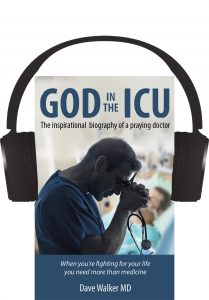
Quote from God in the ICU: Chapter three

 “With a numb sense of unreality, we caught the flight to Cape Town the following morning. I identified my dead brother and then, with Erica (his pregnant wife of just three months), my grieving parents and my sister, we buried him.

For three weeks I thought that I would tear apart from grief as waves of agonising sadness gripped my heart. Then that was replaced by a cold anger against God. I had always regarded Him as loving and caring. He could have stopped this happening. Didn’t He hold the whole world in His hands? Is that how He treated His creation?”

———— o ————

” Psalm 22:1 “My God, my God, why have You forsaken me? Why are You so far from saving me, so far from the words of my groaning?”

The question of reconciling suffering with a good God is one that has occupied the minds and words of philosophers for aeons.

My reaction to the death of my brother was merely the echo of a cry that has reverberated through the ages. I did not doubt the existence of God, as many who suffer have done, but I questioned His nature.

Have you done the same? It’s a natural response. After all, from a human perspective, what would we think of someone who had the chance to rescue us from a tragedy, yet stood by and watched it unfold?

Yet, think back to your childhood. Were there times when you thought your parent was unfeeling, harsh, and unfair? But now, through the wisdom of the intervening years, does that parent still seem so cruel? Gauged against the rest of their track record with you, is it consistent with the way they treated you? I remember bawling uncontrollably when my parents would not let me go to a boxing tournament (I loved my boxing as a ten-year-old) because I had been invited to an outing with family. Today, I look with amusement on that incident and realise I learned a valuable lesson. Family comes first. It’s a trivial example, but I can tell you, at the time, my feelings towards my mother were about as vehement as they were towards God when my brother was killed.

One of the problems is that we live with a world view that says all suffering is bad and should be avoided at all costs. In fact, think of the technical advances that have been made through the ages. Aren’t they nearly all designed to make our lives more comfortable?

There is no doubt that God’s ultimate purpose is for us to live in a world where there is no suffering. In Isaiah 51:11 God says, “Gladness and joy will overtake them, and sorrow and sighing will flee.”  Jesus demonstrated the heart of God when He walked this earth and relieved suffering wherever He went.

However, the time for that has not yet come. Jesus suffered at the hands of evil men, and we also might suffer because of the evil that lurks in a fallen world.

We are living in a war zone. We are on a collision course with the world and those under the control of the “ruler of the kingdom of the air”. (Eph. 2:2) In 1 Peter 4:12,13 we read,

“Dear friends, don’t be surprised at the fiery trials you are going through, as if something strange were happening to you.

Instead, be very glad—for these trials make you partners with Christ in his suffering, so that you will have the wonderful joy of seeing his glory when it is revealed to all the world.”

Therefore, we will suffer, as Jesus, our Commander in Chief suffered.

Yet, if we let Him, God will walk beside us through the storm, and will often use our suffering.

Looking back, I can see God used the death of my brother to shake me out of my complacency about God. I no longer took Him for granted, living a prayerless life and just assuming He would always be there for me in my independence.

There are two reactions we can take to tragedy. We can walk away from God, or we can hurry towards Him. I chose to walk away — into years in a wilderness of disillusionment.

Further scripture readings:

  • Isaiah 50:10
  • John 16:20
  • Psalm 27:13,14

For discussion:

  • Have you suffered a tragedy in your life? If so, how did you respond? How did that make you feel?
  • Psalm 34:18 says, “The Lord is close to the broken-hearted and saves those who are crushed in spirit.”  Have you experienced that?
  • When others are broken-hearted, can you come alongside them as Jesus does with you?
Why celebrate?

Why celebrate?

There’s only one cause to celebrate, this year

As 2020 draws to a close, there’s hardly cause to welcome 2021 with any sort of joyful anticipation.

Many, suffering ‘lockdown fatigue’ are being more lax about the precautions set in place to stop the spread of Covid 19, and infections are soaring. In a malevolent twist, the virus has taken advantage of this and mutated to a more virulent form. Death, suffering, bereavement and fear are trampling our planet.

Until this year, Christmas, for many, has merely been a prelude to welcoming the New Year. Perhaps God is urging us, now, to focus on the real reason we celebrate, for if we do that, we can look to the future with optimism.

If God can be compassionate enough to come to earth and identify with us to the extent that He feels our pain, shares our joys, demonstrates the true heart of God and then represents us before the Father to take our punishment, He will surely see us through this turbulent time if we will entrust ourselves into His loving, capable hands.

So, let’s celebrate the real Christmas story, and let the Prince of Peace speak into our hearts.

Real Christmas

God gave His Son that all the world
Would have the chance to be with Him.
His glorious presence now was curled
Within the confines of a womb.

His gift to Man took history
And pulled its course away from Hell
Unfathomable mystery
A love that has no parallel.

And now to celebrate His gift
Throughout the world we also give,
With presents for our families
With parties, food and talk of love.

Yet often in this crazy world
We give our gifts, not knowing why
We break the bank to buy the best
We worry it won’t satisfy.

We party with our families
We eat and drink and stay up late
But if in this we exclude Him
There’s nothing left to celebrate.

It all becomes an empty show
That merely gets us deep in debt
And all the feasting and the hype
Can’t heal our pain, nor our regrets.

For though we share our human love
Forget our woes with food and wine
Our loneliness requires a heart
That’s grateful for a love divine.

We need to know a God who cares
Who wants us all to worship Him
To celebrate the way He’s made
To rescue us from all our sin.

If we party, give our gifts
Ignoring Him who’s paid the way
Then ‘Happy Christmas’ is just words
Whose meaning fades with Boxing Da
y

For always when we celebrate
A God who came to be with us
The next act hovers in the wings
A Saviour hanging from a Cross.

It’s He who rolled away the stone
Conquered death and rose again
Ascended to His heavenly throne
And lives within the hearts of men

It’s not His birth that gives us joy
But why He came — what it was for
That’s why we’re grateful, celebrate
The Baby on a bed of straw

Witnessing for Jesus in hospital and out
A new doctor is caught in a web of African superstition and dying children.