Listen to the Music
“I would have despaired unless I had believed that I would see the goodness of the Lord in the land of the living. Wait for the Lord; be strong and let your heart take courage; yes, wait for the Lord.”
— Psalm 27:13–14 (NASB)
Why I Wrote Listen to the Music
For most of my life, I have worked in operating theatres, intensive care units, and some of the world’s most demanding medical environments. Along the way, I have witnessed intense suffering. I have seen lives changed in an instant from injury or disease, families facing unimaginable decisions, and people standing at the edge of uncertainty.
Yet alongside the pain, I have also watched individuals endure loss, uncertainty, and suffering while holding onto a belief that there is something greater than what they could see in that moment. In many instances, I have been privileged to help them hold onto a God of love despite the trials.
I wrote Listen to the Music because I believe stories have the power to reach places that explanations often cannot. A story can make us pause, challenge our assumptions, awaken compassion, stir forgotten memories — perhaps even help us hear God’s voice in a new way.
These stories are, in many ways, a reflection of what I have witnessed throughout my life: the reality of human suffering, the complexity of faith, and the quiet, persistent presence of God—even in the moments when He seems silent.
What You Will Find Inside
Listen to the Music is a collection of true Christian short stories shaped by real experiences, encounters with people from different cultures, and a deep conviction that God is present in every part of life.
Whether you are new to faith, wrestling with difficult questions, or have walked with Christ for many years, these stories invite you to pause and reflect on your own journey.
Within these pages, you will encounter people whose lives reveal extraordinary courage, sacrifice, heartbreak, and faith.
You will meet Father Damien in “Plundering a Hell on Earth,” a powerful account of sacrificial love and compassion in the face of overwhelming human suffering.
You will be challenged to consider eternal truths in “I Did It My Way,” a story that invites reflection on the choices we make and the paths we follow.
You will encounter the devastating consequences of conflict in “Scorched Earth, Seared Soul,” where the tragedy and senselessness of war leave a lasting mark on both the land and the human heart.
And in “To Mary, and Mary,” you will discover a tender and deeply moving story of love, humanity, and connection.
Each story stands on its own, yet together they form something larger: a collection of moments that invite readers to think deeply, feel honestly, and look again for the presence of God in both the extraordinary and the ordinary.
These are not simply stories meant to entertain. They are stories intended to stay with you.
A Perspective Shaped by Life and Faith
As a physician, I have had the privilege of serving in South Africa, Namibia, China, the United Kingdom, and the Middle East. These experiences have taken me across cultures, communities, and circumstances that have profoundly shaped the way I see the world.
I have seen extraordinary resilience despite devastating suffering. I have seen how fragile life can be, but also how remarkably strong the human spirit can become when sustained by hope.
Although my medical background has given me a close view of the realities of pain, loss, and human vulnerability, my Christian faith has given me a different lens through which to understand those experiences. That combination shapes the stories in Listen to the Music.
They do not attempt to offer easy answers to life’s difficult questions. They acknowledge the reality of pain while holding onto the possibility of hope. Faith does not remove every struggle, but it gives us something to hold onto as we walk through them.
The stories, then are deeply human, spiritually reflective, and grounded in the realities of life.
What Readers Are Saying:
One reader described the experience this way:
“The best accolade I can give is that it leads you to search your own heart and that of the Lord.”
Another reader wrote:
“A real treasure trove of vignettes, little polished gems that keep me digging for more. I wept on several occasions at the beauty of your language and the emotions you evoked.”
These responses capture something of what I hoped the book might accomplish — not simply to provide answers, but to encourage reflection, inviting readers to search their own hearts. And perhaps, in doing so, to listen more carefully for the voice of God.
Why This Book Matters Now
We live in a world filled with noise.
There are endless voices competing for our attention, voices of fear, anger, distractions and uncertainty. For many people, the future can often feel uncertain, and anxiety is overwhelming.
With all this noise, it can be difficult to listen, to be still, to trust.
Yet Scripture reminds us that God’s presence does not depend on our circumstances, nor on our seasons of waiting. Sometimes His music is loud and unmistakable. Sometimes it is quiet. Sometimes, we must wait patiently before we can hear it again.
Listen to the Music is an invitation to pause amid the noise and pay attention to Him, to the people around us and to His involvement in it all. It is a reminder that even when we cannot understand the entire melody, we may still trust the One who is composing it.
Finally
Life does not always unfold according to our plans. There are moments when faith feels effortless, and others when waiting becomes one of the greatest tests of all.
But even in the waiting, God is at work.
And even when we cannot yet understand the melody, we can trust the One who holds the music.
May you find strength when the journey feels difficult.
May you find courage when the future feels uncertain.
May you learn to wait with hope.
And may you continue to believe, as the Psalmist says in psalm 27, that you will see the goodness of the Lord in the land of the living.
Blessings,
Dave Walker, MD
Author of Listen to the Music
About the Author
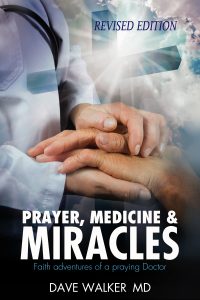
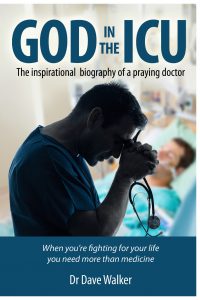
Dave Walker, MD is a physician whose medical career has taken him into operating theatres, intensive care units, and challenging medical environments across several parts of the world.
Having served in South Africa, Namibia, China, the United Kingdom, and the Middle East, his experiencesh ave provided him with a unique perspective on human suffering, resilience, faith, and hope.
He now lives in Howick, South Africa, with his wife, Dorelle.
Learn more:
Dave Walker’s Websitehttps://www.scribewalker.com/
Explore his books:
Dave Walker on Amazonhttps://amazon.com/author/dave_walker_md